Choose the actual visit
Check which palace and garden areas your ticket covers and the current opening calendar; the whole complex is not one unrestricted walk. [4]
CENTRAL KYOTO · JAPAN · VISIT GUIDE
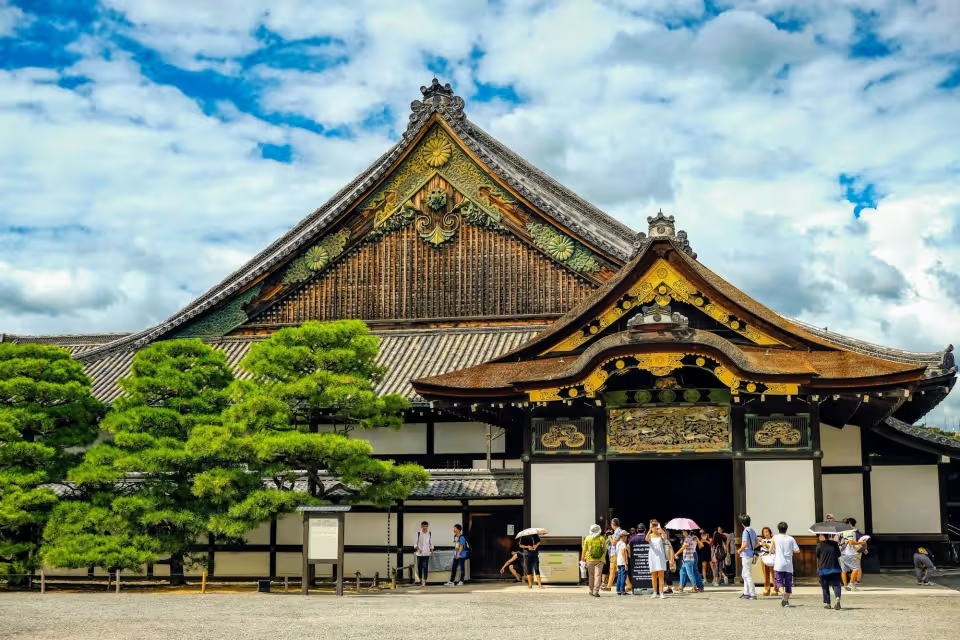
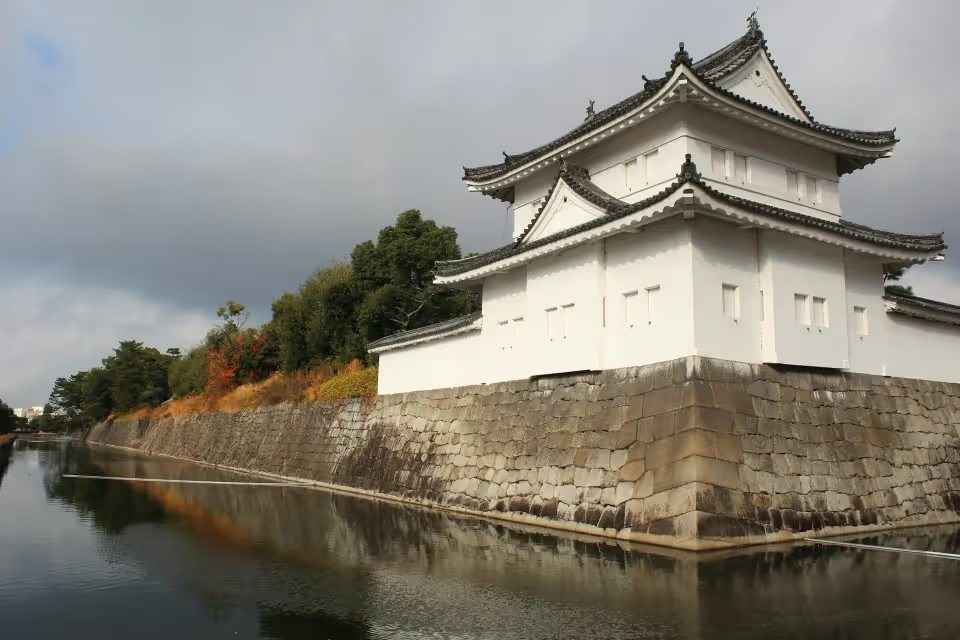
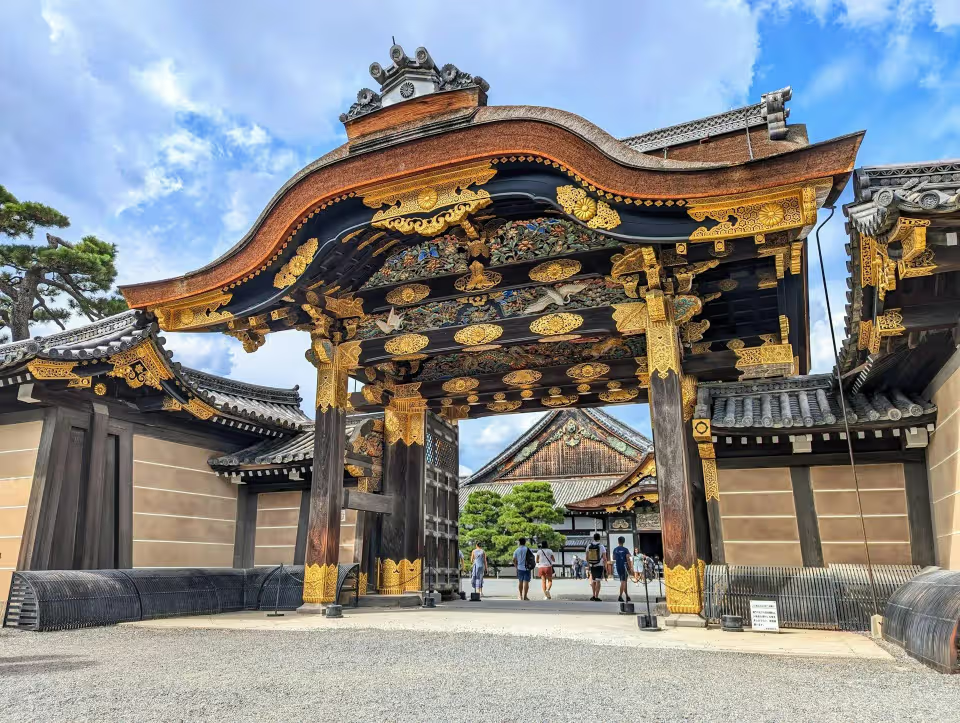
Nijo Castle is one of Kyoto’s most important historic landmarks and a powerful symbol of Japan’s feudal era. Built in the early 17th century, it served as the Kyoto residence of Tokugawa Ieyasu, the first shogun of the Tokugawa shogunate, and was designed to showcase authority, wealth, and political power.
 Curated by Sandra ↗Japan curation · Planning notes
Allow 1h for the visit, then add the journey.
The time above is Fyno’s curated visit allowance. Add the approach, queues, booked sessions and the return.
Check which palace and garden areas your ticket covers and the current opening calendar; the whole complex is not one unrestricted walk. [4]
Use rail where it fits, then walk within a district. Arashiyama, Fushimi Inari and northern temples are not one compact walking circuit. Leave a buffer for buses and crowded approaches. [3]
 SandraJapan expert
Original curator notes · check current details.
Wear quiet, flat shoes — you’ll notice the nightingale floors more clearly as you walk.
Spring and autumn are especially beautiful, with cherry blossoms and fall foliage in the castle gardens.
These are the original tips from Sandra’s Japan curation. Personal recollections describe past visits. Check current access, prices, inclusions and booking rules with the venue or operator for your dates.
Choose a district rather than collecting every famous temple. In Gion, follow posted access and photography rules and give residents and working geiko and maiko space. [4]
These share a source region and may still need a separate journey. Compare their actual locality and map before combining visits.
Nijo Castle is one of Kyoto’s most important historic landmarks and a powerful symbol of Japan’s feudal era. Built in the early 17th century, it served as the Kyoto residence of Tokugawa Ieyasu, the first shogun of the Tokugawa shogunate, and was designed to showcase authority, wealth, and political power.
The castle is best known for its elegant Ninomaru Palace, featuring beautifully painted sliding doors, detailed wood carvings, and expansive tatami rooms where major political decisions once took place. Walking through the palace offers a rare glimpse into the life of Japan’s ruling elite during the Edo period.
One of Nijō Castle’s most famous features is its “nightingale floors,” which chirp softly underfoot to alert guards of intruders. Surrounding the palace are landscaped gardens, stone walls, and a wide moat that create a calm, spacious atmosphere in the heart of Kyoto.
Today, Nijō Castle is a UNESCO World Heritage Site and a must-visit for travelers interested in Japanese history, architecture, and traditional garden design.
Fyno’s curated allowance is 1h. It excludes the approach, queues, any required booking and your return journey.
It is a curated alternative and is not selected in the saved default routes.
Fyno curation reviewed November 4, 2026 against the October 27 website catalog. Editorial planning advice updated 2026-11-04. Check current operating details with the venue before visiting.
Curated descriptions and original Expert tips retain their source status. Editorial planning notes do not verify current admission prices, opening hours, availability, trail conditions or a connected travel-date itinerary.
The source curation group is Kyoto. The page identifies Central Kyoto; region membership is not a promise of a short journey.
No independent venue operating-status check is recorded for this page. Confirm the particular experience and access before booking.
[4] Kyoto Travel: respect Gion’s residents[3] JR Central: oversized baggageEditorial planning updated 2026-11-04. Check current access and booking details before travel.
 CastleHistoric architectureSamurai eraJapanese gardensUNESCO siteHistory
 Flexible stop choicesEight starting routesTop reviewsGreat valueLocation fits your route